

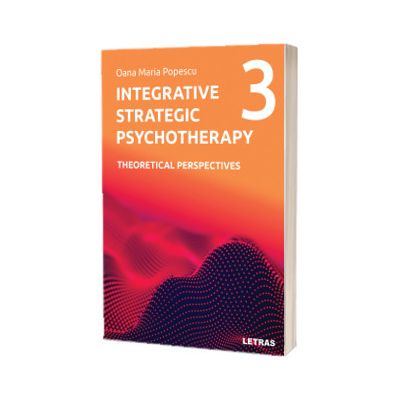
Integrative Strategic Psychotherapy
Preț: 330,00 lei
Disponibilitate: In stoc furnizor - Timp confirmare stoc: 1 - 2 zile lucratoare

Autor: Oana Maria Popescu
Editura: LETRAS
DESCRIERE
he Integrative Strategic Psychotherapy series was conceived as both a comprehensive training manual and a continuing professional resource for psychotherapists at all stages of development. Across its six volumes, the series aims to accompany the reader through the evolving landscape of integrative and evidence-informed psychotherapy, blending theoretical depth with clinical practicality.
The series provides a structured and coherent learning path for students and supervisees who wish to understand and apply the Integrative Strategic Psychotherapy (ISP) model in their practice. At the same time, it serves as a reference and reflective resource for experienced psychotherapists seeking to deepen their understanding of integration, refine their technique, and ground their clinical decisions in a theoretically unified framework.
Each volume addresses a distinct aspect of the model - from its theoretical and philosophical foundations, to assessment, formulation, and intervention strategies, to its application in specific clinical areas. Together, the volumes form a cohesive body of knowledge that bridges neuroscience, developmental psychology, and the relational traditions of psychotherapy.
The ISP model integrates multiple dimensions of human functioning: biological, psychological, and relational levels intersect with cognitive, emotional, and psychodynamic axes. At its centre lies the conception of the self as a dynamic and evolving structure, encompassing the proto, core, plastic, and external domains. This framework allows for a flexible yet disciplined approach to therapeutic understanding and intervention - one that honours both the complexity of the human psyche and the uniqueness of each client’s story.
The intention is not only to teach a model, but to cultivate an integrative mindset - one that values creativity, critical thinking, and relational authenticity as much as technical skill. Whether used as a training manual, a supervision companion, or a source of inspiration for ongoing clinical reflection, the Integrative Strategic Psychotherapy series invites psychotherapists to engage in a process of lifelong integration: between theory and practice, self and other, science and art. - The Author
Integrative Strategic Psychotherapy Vol. 3: Theoretical Perspectives
Table of Contents
CHAPTER 1. FREUDIAN PSYCHOANALYSIS
1.1. Freudian Psychoanalysis - The Basics
1.2. The Self and The Ego in Freudian Psychoanalysis
1.3. Integrating Freudian Concepts with ISP
CHAPTER 2. JUNGIAN PSYCHOANALYSIS
2.1. Jungian Psychoanalysis - The Basics
2.2. The Self and The Ego in Jungian Psychoanalysis
2.3. Integrating Jungian Concepts with ISP
CHAPTER 3. LACANIAN PSYCHOANALYSIS
3.1. Lacanian Psychoanalysis - The Basics
3.2. The Self and The Subject in Lacanian Psychoanalysis
3.3. Integrating Lacanian Concepts with ISP
CHAPTER 4. ADLER’S INDIVIDUAL PSYCHOLOGY
4.1. Adlerian Psychotherapy - The Basics
4.2. The Self and The Ego in Adler’s Individual Psychology
4.3. Integrating Adlerian Concepts with ISP
CHAPTER 5. WINNICOTT’S OBJECT RELATIONS THEORY
5.1. Winnicott’s Object Relations Theory - The Basics
5.2. The Self and The Object in Winnicott’s Theory
5.3. Integrating Winnicott’s Concepts with ISP
CHAPTER 6. THE INTERSUBJECTIVE FIELD: DANIEL STERN
6.1. Daniel Stern’s Theory - The Basics
6.2. The Developmental Architecture of The Self in Stern’s Model
6.3. Integrating Stern’s Concepts with ISP
CHAPTER 7. MASTERSON’S DEVELOPMENTAL THEORY
7.1. Masterson’s Developmental Theory - The Basics
7.2. The Structure of The Self in Kohut’s Model
7.3. Integrating Masterson’s Concepts with ISP
CHAPTER 8. KOHUT’S SELF PSYCHOLOGY
8.1. Kohut’s Self Psychology - The Basics
8.2. The Structure of The Self in Kohut’s Model
8.3. Integrating Kohut’s Concepts with ISP
CHAPTER 9. SOCIAL LEARNING THEORY
9.1. Social Learning Theory - The Basics
9.2. Core Constructs and Mechanisms of Social Learning
9.3. Integrating SLT Principles with ISP
CHAPTER 10. COGNITIVE-BEHAVIOURAL PSYCHOTHERAPY
10.1. Cognitive-Behavioural Therapy - The Basics
10.2. The Cognitive Model of The Mind and The Concept of Self in CBT
10.3. Integrating CBT Principles with ISP
CHAPTER 11. TRANSACTIONAL ANALYSIS
11.1. Transactional Analysis - The Basics
11.2. Ego States and The Structure of The Self
11.3. Life Scripts and Strategic Narratives
11.4. Integrating Transactional Analysis Concepts with ISP
CHAPTER 12. GESTALT THERAPY
12.1. Gestalt Therapy - The Basics
12.2. The Gestalt Concept of The Self
12.3. Integrating Gestalt Principles with ISP
CHAPTER 13. PSYCHODRAMA
13.1. Psychodrama - The Basics
13.2. The Role Theory and The Structure of The Self
13.3. Integrating Psychodramatic Concepts with ISP
CHAPTER 14. EXISTENTIAL PSYCHOTHERAPY
14.1. Existential psychotherapy - The Basics
14.2. The Existential Conception of The Self
14.3. Integrating Existential Principles with ISP
CHAPTER 15. PERSON CENTRED PSYCHOTHERAPY
15.1. Person-Centred Therapy - The Basics
15.2. The concept of Self in Rogers’ Theory
15.3. Integrating Person-Centred Psychotherapy with ISP
CHAPTER 16. FAMILY SYSTEMS THEORY
16.1. Family Therapy - The Basics
16.2. The Concept of The Self in Family Therapy
16.3. Integrating Family Systems Principles with ISP
CHAPTER 17. BODY PSYCHOTHERAPY
17.1. Body Psychotherapy - The Basics
17.2. The Body as The Ground of The Self
17.3. Toward an Embodied Integrative Paradigm
CHAPTER 18. TRAUMA-INFORMED PSYCHOTHERAPY
18.1. Trauma - Informed Psychotherapy - The Basics
18.2. The Concept of The Self in Trauma-Informed Perspectives
18.3. Integrating Trauma-Informed Principles with ISP
CHAPTER 19. MAPPING INTEGRATION
19.1. The Evolution of Integrative Psychotherapy
19.2. Comparative Overview
19.3. Congruences and Divergences
19.4. Toward a Meta-Integrative Future
About the author:
Oana Maria Popescu is a European-certified psychotherapist, trainer and supervisor in integrative psychotherapy, child and adolescent integrative psychotherapy and integrative-expressive psychotherapy, founding president of the Research, Counseling and Integrative Psychotherapy Association, the first institute in Romania with EAPTI accreditation. He is the president of the accreditation commission within the European Association of Integrative Psychotherapy and the coordinator of training standards in integrative psychotherapy in Europe. He is part of the editorial board of the European Journal of Qualitative Research in Psychotherapy.
Founding President of the Association for Research, Counseling and Integrative Psychotherapy
President of the Professional Commission of the Romanian Federation of Psychotherapy
Coordinator of training standards in integrative psychotherapy (training standards officer) and president of the accreditation commission of the European Association of Integrative Psychotherapy (EAIP - European Association of Integrative Psychotherapy).
Treasurer and member of the Steering Committee of the European Interdisciplinary Association for Therapeutic Services for Children and Young People (EIATSCYP - European Interdisciplinary Association for Therapeutic Services for Children and Young People)
Member of the Society for the Exploration of Psychotherapy Integration (SEPI - Society for the Exploration of Psychotherapy Integration)
Member of the editorial board of the European Journal of Qualitative Research in Psychotherapy.
Associate member of the American Psychological Association
Member of the International Society of Political Psychology (ISPP - International Society of Political Psychology).
Titluri de aceiași autori
‹
82,73 lei
PRP: 90,90 lei

›
OPINIA CITITORILOR